
Clay Composites
Exploring Recycled Shaadu Maati for Sustainable Architecture Research by Ar. Isha Naik
The Clay Composites research explores the potential of recycled Shaadu Maati, collected through the Punaravartan campaign, as a natural building material. Through experiments with natural additives, fibres and binders, the study investigates how recovered clay can be developed into blocks, panels and plaster finishes for green building applications.
Why Recycle Clay?
Shaadu Maati is a naturally occurring clay used for making Ganesh idols. After immersion, large quantities of clay can accumulate in water bodies. The Punaravartan campaign collects this clay sludge and returns it to artisans. Recycled clay can also be explored for other applications, including natural building materials.
Experiments with Natural Additives
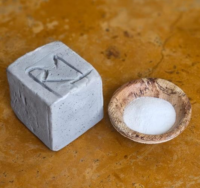
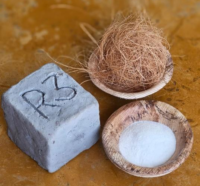
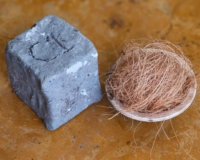
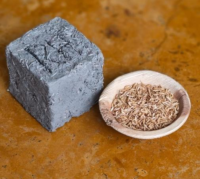
Different natural mineral fillers and organic materials were tested to improve the properties of recycled clay blocks. The experiments explored materials such as Rangoli powder, sawdust, coco coir, rice husk, waste paper pulp and cow dung to understand their impact on weight, shrinkage, cracking and surface finish.
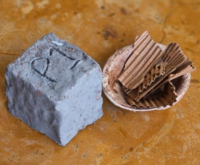
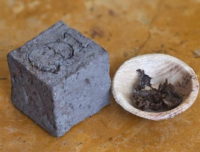
From Blocks to Panels and Plasters
The research also explored reinforced panels using natural bases such as canvas sheet, bamboo mat, jute sheet and cement sheet, along with clay-based plasters prepared using tapioca starch, fenugreek water and natural gum. These experiments highlight the potential of recycled clay in various architectural applications, including blocks, wall panels and plaster finishes.
Key Findings
The experiments indicate that recycled Shaadu Maati can be explored as a natural building material. The findings highlight the importance of selecting suitable additives, reinforcement bases and binders for different applications.
Read the Complete Research
Discover the detailed methodology, experimental mix proportions, material-property tables, observations, photographs and references in the complete research document by Ar. Isha Naik.
Research document: Punaravartan Clay Recycling Experiments by Isha Naik
Researcher: Ar. Isha Naik
Document length: 73 pages